
When design becomes strategy
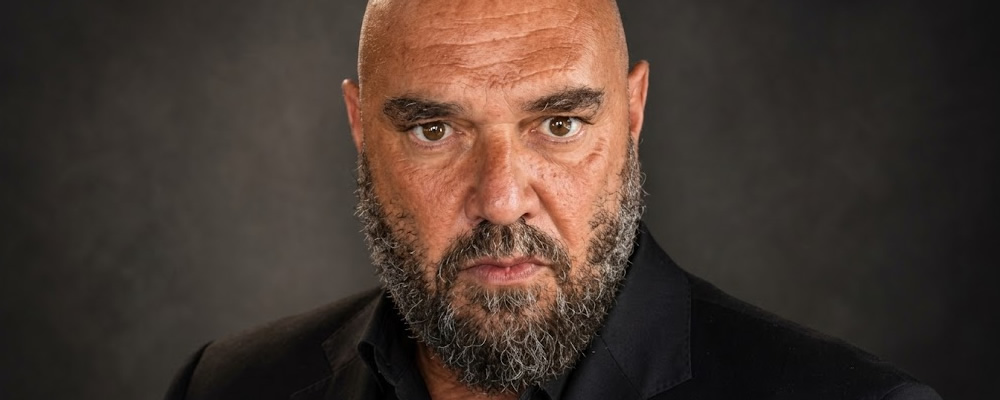
Interview with Stefano Porcini, Head of Design & Consumer Experience of Flora Food Group
September 6th, 2026
“A designer is not an artist.”
A simple, almost provocative statement that challenges one of the most deeply rooted assumptions when it comes to design.
The designer is not an artist called upon to express their creative sensibility exclusively. Their role, especially within contemporary organizations, is much more complex: understanding problems, interpreting needs, building solutions, influencing decisions, and transforming business strategy into experiences capable of generating value.
This is one of the central themes that emerged from our conversation with Stefano Porcini, Head of Design & Consumer Experience at Flora Food Group.
A reflection that naturally leads us to question the evolution of the role of design within companies and the growing importance of the Chief Design Officer, a position that can no longer be considered simply responsible for creativity.
Today, design is increasingly becoming directly involved in business decisions, engaging with technology, marketing, product development and organizational processes, and can become a tangible driver of innovation, growth and competitiveness.
We spoke with Stefano Porcini about what it really means to be a designer, how to recognize talent beyond the portfolio, and why the future of design increasingly belongs to professionals capable of speaking the language of business without losing the ability to design change.
Stefano, let’s start with a very strong statement: “A designer is not an artist”. Why do you feel the need to emphasize this distinction?
Stefano Porcini: Because there is still a perception of the designer as a creative person who produces something beautiful.
Of course, creativity is an important part of our work, but it is not the work itself.
An artist may have as their primary objective the expression of their own vision, sensitivity or research. A designer, on the other hand, works within a context and has a different responsibility.
They are called upon to solve problems.
They must understand people, the market, technology, business and the organization’s objectives. They must take all these elements and transform them into something that creates value.
That is why I consider design a discipline that is much broader than simple creativity.
So a designer should not start with the question “what do I want to create?”, but rather “what problem do I need to solve”?
Stefano Porcini: Exactly.
The starting point should always be the problem, or better yet, the opportunity.
A designer must be curious. They must want to understand why things work in a certain way, why people behave in a particular way, and where there are opportunities for improvement.
Only then does the solution come.
This is also why I consider creativity only one part of the equation.
Having a good idea is important. But turning that good idea into something that actually works is much more difficult.
So what skills distinguish a truly effective designer?
Stefano Porcini: There are several dimensions.
Creative ability is certainly one of them, but strategic thinking, execution skills, business understanding and interpersonal skills are also essential.
A designer must be able to collaborate with people whose expertise is very different from their own.
They must be able to talk to marketing, engineering, technology, finance and management.
And above all, they must know how to influence decisions.
Because a design solution, no matter how brilliant, creates no value if it cannot enter the organization and become reality.
So designing also means knowing how to persuade?
Stefano Porcini: Absolutely.
It is a part of the job that is often underestimated.
The designer does not work alone. In large organizations, decisions are the result of a process involving many stakeholders.
You need to be able to build consensus, explain your choices, understand the concerns of others and, at the same time, defend what you believe is important.
In this sense, the designer must also be a leader.
Not necessarily because they have a managerial title, but because they must be able to lead people toward a vision.
Is this where the relationship between design and business comes into play?
Stefano Porcini: Yes, and it is an increasingly important relationship.
For a long time, design and business were considered almost two separate worlds.
On one side were the people dealing with strategy, numbers and results. On the other were those dealing with creativity and design.
Today, this separation no longer makes sense.
Design can contribute directly to business strategy because it helps an organization better understand its customers, create more relevant products and services, and build more effective experiences.
The point is not to make the business “more beautiful”.
The point is to make it better.
This is probably also why the role of the Chief Design Officer has become increasingly relevant.
Stefano Porcini: Yes. The Chief Design Officer represents precisely this evolution.
They should not simply be the head of the creative function.
They are an executive who uses design as a strategic capability of the organization.
This means participating in important conversations, understanding the company’s objectives and contributing to defining them.
A CDO must be able to work alongside the CEO and other members of the leadership team.
Their role is not simply to ensure that products are well designed. They must help the organization use design to grow, innovate and differentiate itself.
Which areas should a Chief Design Officer be able to connect?
Stefano Porcini: Ideally, all those that contribute to the relationship between the company and people.
Brand, product, customer experience, technology, communication and even organizational culture.
These elements are too often managed separately.
But for the consumer, they are not separate.
When a person comes into contact with a company, they experience a single, unified experience.
That is why the role of design is also to create connections between different functions and build a coherent vision.
So does the CDO become a sort of “connector” within the organization?
Stefano Porcini: Yes, and this is one of their most important responsibilities.
Organizations are complex systems. Every function has its own objectives, its own language and often its own priorities as well.
Design can help bring the discussion back to a fundamental question: what are we trying to create for people and why?
This makes it possible to align different stakeholders around a common vision.
And when this alignment is achieved, it becomes much easier to turn a strategy into something concrete.
There is another point in your reflection that is striking: the idea that hiring a designer by looking primarily at their portfolio is a mistake. Why?
Stefano Porcini: Because the portfolio tells only part of the story.
It tells us what a person has produced, but not necessarily how they got there.
We do not know how much of that work is actually theirs, what problems they had to deal with, what compromises they managed, or how they collaborated with others.
And above all, it does not necessarily tell us how they think.
A portfolio can be spectacular and belong to someone who, in a complex organization, might not be able to generate the same level of impact.
So what should we be looking for during a selection process?
Stefano Porcini: I would try to understand the candidate’s thought process.
I would want to know how they deal with ambiguity, how they define a problem, how they make a decision and how they react when a solution does not work.
I would want to understand how they work with people who are not designers.
And above all, I would want to understand whether they are capable of leading a project when conditions are not perfect.
Because in reality, there are no perfect briefs.
There are complex problems, incomplete information, constraints, different opinions and often conflicting interests.
True talent emerges precisely there.
So is the ability to navigate complexity more important than the perfection of the final result?
Stefano Porcini: In many cases, yes.
A professional designer must be comfortable with complexity.
They must know how to distinguish what is truly important from what is not, find a direction when there are many possibilities, and maintain focus even when the project changes.
And they must do so without losing the ability to collaborate.
Leadership in design does not mean always being right.
It means creating the conditions for a group to arrive at the best solution.
So how important is the ability to work in a team?
Stefano Porcini: It is essential.
The most ambitious projects are rarely the result of a single person.
They require designers, engineers, marketers, developers, researchers, managers and many other professionals.
The designer must be able to build bridges between these areas of expertise.
They must know how to listen while also having a vision.
They must be able to translate between different languages.
This is one of the reasons why I consider design a strategic discipline: because it can connect perspectives that might otherwise remain separate.
So what is the real value a designer can bring to an organization?
Stefano Porcini: The ability to transform a vision into something concrete.
A strategy can be highly sophisticated, but it remains abstract until it is translated into products, services and experiences.
The designer works precisely on this transformation.
They take something that is often difficult to see — a strategy, an ambition, a consumer need — and make it tangible.
This is an enormous value for any organization.
And what, in your opinion, will the future of the profession look like?
Stefano Porcini: I believe design will continue to become increasingly central to business.
But this will also mean greater responsibility for designers.
It will not be enough to create beautiful products.
We will need to better understand business, technology, people and the organization.
We will need to be able to demonstrate the value of our decisions and participate in strategic discussions.
The designer of the future will not simply be the person who designs.
They will be the person who helps decide what is worth designing and why.
So the future of design does not necessarily belong to whoever creates the most beautiful product?
Stefano Porcini: No.
It belongs to those who can make design indispensable to strategy.
Beauty will remain important. Aesthetic quality will continue to play a role.
But it will not be enough.
The real leap forward happens when design becomes an integral part of the way an organization makes decisions, innovates and creates value.
Beyond the portfolio: the designer as a business leader
The conversation with Stefano Porcini suggests a broader reflection on the evolution of contemporary design.
The designer is no longer simply the person who gives form to things. They are a figure called upon to understand problems, interpret needs, build visions and transform them into concrete results. This transformation also concerns companies.
If design is confined to its aesthetic dimension, its potential inevitably remains limited. When, on the other hand, it enters decision-making processes, engages with business and contributes to defining strategy, it can become a true driver of innovation and competitiveness.
And it is precisely in this space that the new role of the Chief Design Officer emerges.
A professional who is not simply responsible for a team of creatives, but a true business leader capable of connecting brand, product, experience, technology and organizational culture.
Perhaps, then, the most interesting question is no longer “How good is this designer at creating?”, but “How good are they at transforming an organization through what they create?”. This is probably the true evolution of design: moving from being a function that produces outputs to becoming a strategic capability that produces change.
And when this happens, the designer definitively stops being considered merely a creative.
They become part of what determines the future of the company.